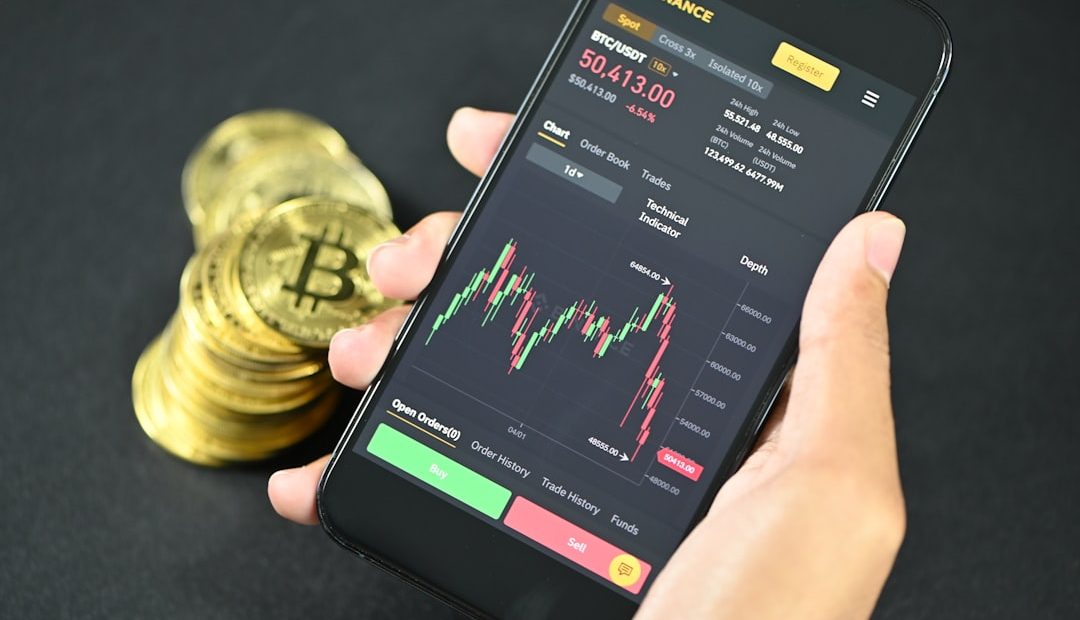
On the morning of a major central bank announcement, trading algorithms can move billions of dollars in equity and currency markets within milliseconds of a headline appearing on a wire service — before most human analysts have read past the first sentence. That dynamic, once confined to the fringes of high-frequency trading desks, now defines how financial news interacts with market behavior across the board. The old editorial tension between getting the story right and getting it first has acquired a new dimension: in markets, the cost of being second is measured in basis points, and the cost of being wrong can be catastrophic.
When Headlines Move Money
The relationship between news and financial markets has always been intimate, but the past decade has collapsed the time between information and reaction to near-zero. Algorithmic trading systems now parse newswire text for sentiment signals, flagging words like “unexpected,” “deficit,” or “rate hike” and executing trades before a human trader could consciously register the headline. Estimates from within the industry suggest that news-driven algorithmic activity accounts for a significant share of the volume spikes that follow major economic data releases — a figure that has grown sharply since the mainstream adoption of natural language processing in trading infrastructure.
This creates a feedback loop with serious implications for ordinary investors. When a misread headline — or a deliberately misleading one — triggers a flash move in equities, retail participants are often the last to understand what happened and the first to absorb the losses. The “flash crash” events of recent years, several of which were partially attributable to algorithmic misinterpretation of news events, have made regulators uncomfortable. Yet meaningful oversight of the news-to-trade pipeline remains elusive, in part because it sits at the intersection of press freedom, financial regulation, and technology policy — three jurisdictions that rarely cooperate smoothly.
The Credibility Premium in a Fragmented Media Landscape
Trust, once taken for granted at legacy financial news organizations, is now a competitive asset that must be actively maintained. The proliferation of financial commentary across social media platforms, newsletters, podcasts, and aggregator sites has made it genuinely difficult for investors — professional and retail alike — to distinguish authoritative reporting from noise. A rumor originating in a niche forum can, under the right conditions, reach enough trading terminals to move a mid-cap stock meaningfully before it is debunked.
For outlets covering markets and macroeconomics, this environment demands both speed and a commitment to verification that are increasingly difficult to reconcile. Readers who need to act on live market news as conditions shift during a trading session cannot wait for a fully reported feature story, but they also cannot afford to act on speculation dressed as fact. The outlets navigating this tension most successfully tend to be those with clearly articulated editorial standards, transparent sourcing practices, and a willingness to issue corrections promptly — qualities that sound basic but are applied inconsistently across the industry.
Disinformation as a Market Risk
Financial regulators have historically focused on insider trading and market manipulation through traditional channels — planted rumors spread through broker networks, coordinated pump-and-dump schemes in penny stocks. The emergence of coordinated inauthentic behavior on social platforms has expanded that threat surface considerably. Short sellers have been accused of amplifying negative coverage of target companies; long holders have been implicated in manufacturing positive sentiment. In both cases, the mechanism relies on blurring the line between genuine news and manufactured narrative.
The challenge for compliance teams and regulators is that distinguishing orchestrated disinformation from legitimate analysis — even aggressive, adversarial analysis — is not straightforward. Critics of a company’s accounting practices have every right to publish their findings. The question is whether the publication is timed and targeted to move prices for someone’s financial benefit, a question that requires access to trading data, communication records, and editorial timelines simultaneously. Few regulatory bodies have the mandate or the resources to conduct that kind of cross-domain investigation at scale.
What Professional Investors Are Actually Doing
In practice, sophisticated institutional investors have developed internal protocols for filtering market-moving news. Many maintain tiered source lists, weighting information from established wires and regulated data providers more heavily than social commentary during volatile periods. Some have introduced mandatory delay mechanisms — brief cooling-off windows before algorithmic systems are permitted to act on unverified breaking news — a low-tech solution to a high-tech problem that has gained quiet traction on trading desks over the past few years.
The broader lesson, perhaps, is that speed and reliability are not inherently at odds, but achieving both requires deliberate investment — in editorial infrastructure, in verification technology, and in the willingness to resist the pressure to publish the unconfirmed. The millisecond race that began in the server farms of high-frequency traders has, in a roundabout way, forced a reckoning with the oldest question in journalism: what exactly do we owe the reader before we hit publish? In financial media, at least, the stakes attached to that question have never been higher.

Leave a Reply