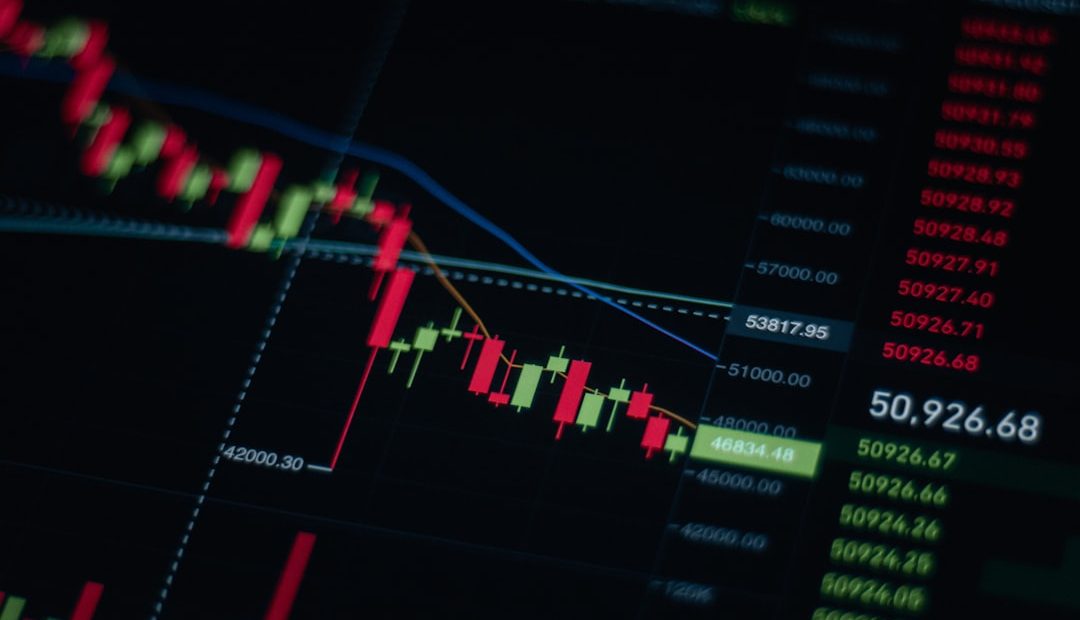
When container shipping rates on the Asia-Europe corridor spiked by nearly 200 percent over the course of a single quarter last year, companies that had been tracking the warning signs — port congestion data, Red Sea incident reports, carrier capacity announcements — were able to adjust procurement strategies weeks before their competitors even noticed. Those that relied on quarterly briefings or general business press were left scrambling. The gap between those two groups wasn’t intelligence; it was cadence. In global trade and financial markets, the speed at which information reaches a decision-maker has quietly become as important as the quality of the information itself.
From Commodity Prices to Geopolitical Triggers: The Expanding Map of Market Risk
Trade news has never been simple, but the variables that now move markets have multiplied in scope and unpredictability. A decade ago, an importer of electronic components might have tracked a handful of indicators — raw material prices, currency fluctuations, perhaps a handful of supplier relationships. Today, that same importer needs to monitor export licensing regimes, sanctions lists that can change overnight, rare earth supply chains threading through politically unstable corridors, and the trade policy signals buried in the speeches of finance ministers on three continents.
The shift is structural, not cyclical. Supply chain diversification — accelerated by the pandemic, then reshaped again by geopolitical fractures between major economic blocs — has created a landscape where a policy announcement in one capital can set off a chain reaction visible in freight markets, equity valuations, and commodity benchmarks within hours. Businesses and investors that treat trade news as background noise rather than actionable intelligence are effectively flying without instruments.
The Professionalization of Market Intelligence Consumption
What has changed most visibly in the past five years is not the availability of trade and financial news — there is, if anything, an overwhelming surplus of it — but the sophistication with which serious market participants are learning to filter and apply it. Treasury teams at mid-sized manufacturers are now expected to have views on dollar-yuan dynamics. Procurement directors sit in on calls about Indian port infrastructure. Small-cap fund managers track Baltic Dry Index movements with the same attention they once reserved for earnings calls.
This professionalization has driven demand for consolidated, economy-focused news sources that sit between the generalist wire services and the expensive subscription-gated terminals traditionally reserved for institutional investors. Platforms dedicated to trading market insights have found a growing audience precisely because they serve readers who need more than headlines but lack the budget or the time for full institutional-grade research services. The sweet spot — curated, market-relevant, and rapidly updated — is increasingly crowded, but also increasingly valued.
The Retail Trader Effect
The democratization of trading platforms over the past decade has added another layer to this demand. Retail participation in equities, commodities, and foreign exchange markets has grown substantially across most developed economies, and with it has come a new class of news consumer: engaged, self-directed, and deeply motivated to connect macro developments to portfolio decisions. This audience reads trade deficit figures not as abstract statistics but as potential catalysts. They watch Federal Reserve language not for academic interest but for positioning signals.
Meeting that audience requires editorial judgment that is genuinely different from traditional financial journalism. The best trade and market coverage explains not just what happened, but why the market’s reaction to what happened was itself the story — and what the reaction reveals about sentiment, positioning, and risk appetite going forward.
Why Getting It Wrong Is Getting More Expensive
The cost of acting on outdated or incomplete trade intelligence has risen sharply. In an era of just-in-time inventory and globally distributed production, a missed sanctions update or a misread tariff escalation can translate into stranded inventory, broken contracts, or regulatory exposure. For traders and investors, the asymmetry is equally stark: markets now price in geopolitical risk faster than most participants can process it, meaning that reaction time to credible new information is measured in minutes rather than days.
Several industries — semiconductors, agricultural commodities, energy — have experienced whipsaw price movements driven almost entirely by policy announcements and the subsequent interpretive news cycle rather than underlying supply-demand changes. Understanding that dynamic, and having the media infrastructure to follow it in real time, has become a genuine operational necessity for anyone with material exposure to global markets.
The companies and investors that navigated last year’s freight market volatility with relative grace weren’t necessarily smarter than their peers. They had simply built habits of attention — daily routines of reading, filtering, and acting on trade and market intelligence — that let them recognize the pattern before it became a crisis. In a market environment that rewards preparation over reaction, those habits are now among the most valuable assets a business can cultivate.

Leave a Reply