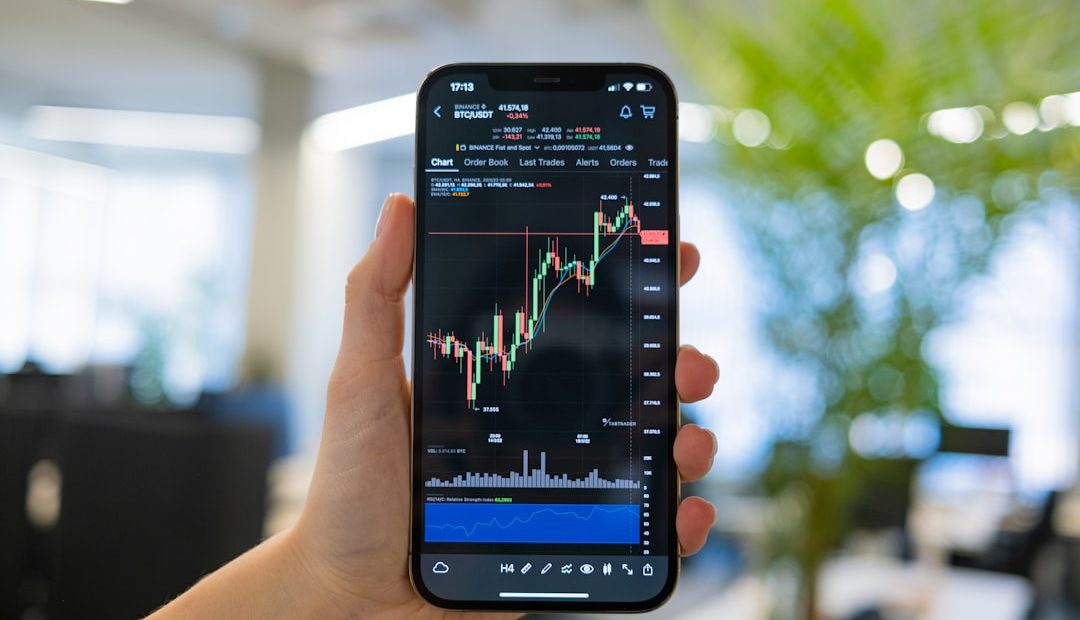
When the Federal Reserve holds its breath before a rate decision, traders don’t wait for the announcement — they watch the newswires. In the past decade, the gap between when information enters the market and when it moves prices has collapsed from minutes to milliseconds. That compression hasn’t just changed trading strategy; it has fundamentally reshaped the relationship between financial journalism, data distribution, and capital allocation. The news feed is no longer a record of what happened. For many market participants, it is the market.
How Real-Time Information Rewired Market Structure
The integration of news aggregation into trading infrastructure accelerated sharply after the 2008 financial crisis, when institutional investors discovered, painfully, that the velocity of information asymmetry could be lethal to a portfolio. Prime brokers and hedge funds began investing heavily in natural language processing tools that could parse central bank statements, earnings calls, and geopolitical dispatches within fractions of a second — long before a human analyst could form a coherent view.
By the mid-2010s, algorithmic systems were routinely trading on headlines before most professional investors had finished reading the lede. The result was a peculiar new dynamic: markets that appeared to move irrationally in the short term were, in fact, moving on information — just information filtered through machines operating at a speed and scale no human could match. Price discovery, once the province of the trading floor, migrated to the data layer sitting above it.
This shift created a two-tier information economy. Large institutions with access to premium data terminals and AI-driven analytics could position ahead of consensus. Retail investors, small fund managers, and independent traders were left navigating an environment where their news was always, by definition, slightly stale. The democratization of trading access through low-cost brokerage platforms resolved the execution gap but did nothing to close the information gap.
The Rise of the Independent Financial Media Ecosystem
Into that gap stepped a sprawling ecosystem of independent financial media — newsletters, aggregators, specialized portals, and curated feeds that aimed to surface relevant market intelligence faster and more selectively than mainstream financial outlets, which remained constrained by editorial cycles and general-audience obligations. These platforms understood something that legacy financial media was slow to accept: the reader consuming market content in 2024 is often also a participant, not merely an observer, and their tolerance for delay or irrelevance is essentially zero.
For traders and investors navigating this landscape, platforms offering curated trading market insights have become a practical alternative to the overwhelming volume of raw financial data — providing contextual framing that helps separate signal from noise without requiring institutional-grade infrastructure.
The quality differential across this new landscape is significant. At its best, independent financial media synthesizes macro trends, sector-level developments, and breaking events into something actionable. At its worst, it amplifies rumor and misreads regulatory signals in ways that can cause genuine, if temporary, market distortions. The meme-stock episodes of 2021 offered a vivid illustration of what happens when retail sentiment, amplified through high-velocity information channels, overwhelms traditional price-setting mechanisms.
Geopolitical Volatility and the Demand for Faster Context
The past few years have added another layer of complexity. Supply chain disruptions, energy market shocks, shifting trade alliances, and the reconfiguration of global manufacturing corridors have made geopolitical literacy a basic requirement for anyone with serious market exposure. A sanctions announcement, a port strike in a major export hub, or an unexpected election result in a resource-rich economy can cascade through commodity prices, currency pairs, and equity indices within hours.
This environment has placed extraordinary pressure on financial journalists and analysts to understand not just markets but the political and logistical systems that underpin them. Coverage of trade flows, tariff regimes, and cross-border capital movements — once the specialist domain of trade economists — has moved toward the center of mainstream financial reporting. Publications and platforms that can connect these dots, rather than treating economics and geopolitics as separate beats, have seen their audience engagement grow accordingly.
Credibility as a Competitive Moat
Speed without accuracy is worse than slowness. The financial media outlets that have built durable audiences are those that have treated credibility as a product feature rather than an abstract virtue. Corrections are published promptly. Source methodology is disclosed. Analytical assumptions are made explicit. In a domain where a misread headline can move a position against a reader’s interest, trust is not a soft metric — it has a measurable dollar value.
That discipline is what distinguishes serious financial journalism from mere content aggregation, and it is increasingly what sophisticated readers are able to identify and seek out. The signal-to-noise problem that rewired market structure a decade ago has not been solved — but the readers learning to navigate it have become considerably more discerning about who they trust to help them do so.

Leave a Reply