
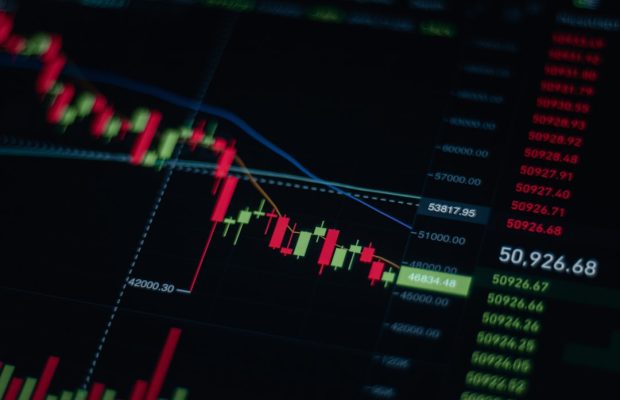
When markets moved on a single Reuters wire crossing the terminal at 9:47 a.m., traders had minutes to react. Now, with algorithmic systems parsing headlines in milliseconds and retail investors refreshing their phones between meetings, the pressure on financial news infrastructure has become something almost structural — less about being first, and more about being first and right. The consequences of getting that balance wrong have never been more visible, or more expensive.
The Attention Economy Meets the Trading Floor
Financial journalism has always operated under competitive pressure, but the past decade has fundamentally altered its metabolism. The proliferation of mobile trading platforms, zero-commission brokerage accounts, and retail investor communities has created an audience that is simultaneously more engaged and more easily misled than any previous generation of market participants. A company earnings beat or a central bank signal that once filtered through layers of analysis before reaching most investors now lands directly in a notification feed, unmediated and often decontextualized.
This compression of time between event and reaction has had measurable market effects. Flash crashes, sentiment-driven momentum swings, and the kind of volatility spikes that seem disconnected from underlying fundamentals have all become more frequent phenomena. Regulators in multiple jurisdictions have begun studying the relationship between news velocity and short-term price distortion, recognizing that the infrastructure of information distribution is itself a systemic variable.
The Problem With “Breaking” as a Brand Promise
The word “breaking” once implied genuine urgency — a story that could not wait for the morning edition. In the current media environment, it has been reduced to aesthetic shorthand, a way of signaling importance rather than timeliness. Financial news outlets, in particular, have leaned into this framing because it drives clicks and sustains the kind of perpetual engagement their advertising models depend on.
The risk, of course, is that breathless framing erodes the credibility that gives financial journalism its actual value. Investors who have been burned by acting on poorly sourced market rumors dressed up as breaking news tend to either overcorrect into paralysis or develop a cynical filter that causes them to dismiss legitimate signals along with the noise. Neither outcome serves the function that quality financial media is supposed to perform. For readers trying to separate signal from static, resources that aggregate and contextualize market developments — including latest investor updates from a range of financial sources — have become a practical part of many investors’ daily routines, precisely because the raw feed of “breaking” news has become so difficult to evaluate in isolation.
Accuracy as a Competitive Advantage — Eventually
There is a counterargument gathering momentum within the industry itself: that accuracy, far from being the slower option, is emerging as the more durable competitive strategy. Legacy financial publications that built their reputations on rigorous sourcing and editorial standards have found that their credibility carries a premium during periods of market turbulence, when investors are most desperate for reliable orientation. Subscription revenue models — increasingly the dominant structure for serious financial journalism — reward that trust directly, creating an economic incentive for quality that pure advertising models never quite managed to sustain.
This shift is also visible in how institutional and semi-professional investors consume news differently from casual retail participants. Sophisticated market participants tend to weight source credibility heavily, discount unverified reports automatically, and value analytical depth over headline velocity. As the retail investor cohort matures — and evidence suggests it is maturing, particularly among the demographics that entered markets during the pandemic era — similar habits are likely to develop more broadly.
What Comes Next for Financial Media
Several converging trends suggest the financial news landscape is approaching an inflection point. Artificial intelligence tools capable of summarizing earnings reports, parsing central bank statements, and flagging material disclosures within seconds of publication are already embedded in professional trading environments. Their eventual integration into consumer-facing platforms will change the production economics of financial journalism dramatically, potentially making high-volume, low-analysis content even less viable as a business model.
At the same time, regulatory attention to AI-generated financial content is intensifying. Questions about liability, disclosure standards, and the potential for automated systems to amplify misinformation at scale are moving from academic discussion into active policy consideration in the United States, the European Union, and the United Kingdom simultaneously.
The underlying tension that opened this story — speed against accuracy, reach against responsibility — is not a new problem in journalism. But the financial news sector is living through a version of it that is more consequential than most, because the decisions its readers make based on imperfect information involve real capital and real risk. The outlets that survive the current disruption will likely be the ones that treat accuracy not as a constraint on speed, but as the only thing that makes speed worth anything at all.

Leave a Reply