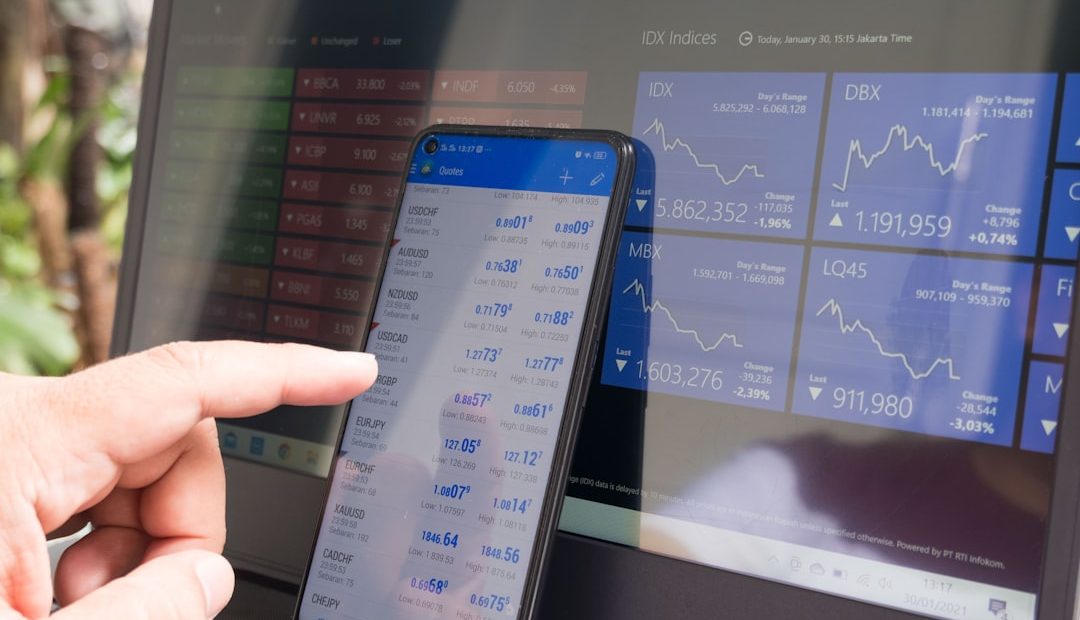
On the morning of a surprise central bank rate announcement, currency markets can swing hundreds of pips within seconds. Equity traders who were positioned before the news broke walk away with gains; those who caught the story thirty seconds late scramble to cut losses. That gap — thirty seconds, sometimes less — has become one of the most fiercely contested frontiers in modern finance, and it is driving a fundamental rethink of how traders, analysts, and institutions consume information.
The Information Asymmetry Problem Has Never Been Bigger
For most of financial history, information asymmetry was a structural feature of markets. Insiders, floor traders, and well-connected analysts had access to price-moving data before the wider public. Regulation closed many of those gaps, but the digital era opened new ones. Today the disparity is less about who has privileged access to corporate secrets and more about who can process publicly available information fastest. A geopolitical development in Southeast Asia, a shipping disruption in the Red Sea, an unexpected inflation print in the eurozone — each of these events cascades through commodity prices, bond yields, and equity indices in ways that reward speed of comprehension above almost everything else.
The practical implication is that the source, format, and velocity of news consumption have become competitive variables in their own right. Institutional desks invest heavily in news-feed latency, natural language processing tools that parse headlines automatically, and sentiment analysis engines capable of flagging macro relevance before a human analyst has finished reading the first paragraph. Retail traders, historically at a structural disadvantage, are now catching up through platforms and aggregators that synthesize market-moving stories from dozens of sources simultaneously.
Trade News Specifically — Why It Carries Outsized Market Weight
Not all news affects markets equally, and experienced traders know that trade-related headlines carry a particularly heavy punch. Tariff announcements, bilateral trade agreement updates, export restriction policies, and supply-chain disruptions all have direct transmission mechanisms into corporate earnings, currency valuations, and commodity demand. When the United States and China exchanged tariff escalations over recent years, the ripple effects ran from soybean futures in Chicago to semiconductor stocks in Seoul. A single policy statement could reprice entire sectors within a trading session.
This sensitivity is why dedicated coverage of international commerce has become a distinct editorial category, separate from general financial news. Traders increasingly seek sources that focus specifically on cross-border economic activity — import and export data, customs policy shifts, logistics bottlenecks, and currency-driven trade competitiveness. Resources that aggregate global trading news into a structured, timely feed serve a genuine editorial function here, helping market participants cut through general-purpose financial noise and focus on the signals most likely to move their specific positions.
The Rise of the Macro-Aware Retail Trader
Something notable has been happening at the retail end of the market over the past several years. The average independent trader today is far more macro-aware than their counterpart from a decade ago. Accessible brokerage platforms, low-cost options trading, and the proliferation of financial commentary on digital media have collectively produced a cohort of retail participants who track central bank meeting calendars, read trade balance reports, and follow geopolitical developments with a discipline that was once the preserve of professional fund managers.
This shift has its downsides — overconfidence and information overload are real risks — but it has also meaningfully increased the quality of price discovery in certain markets. When more participants are tracking the same macro variables and reacting to the same news flows, inefficiencies close faster. Volatility spikes become sharper and shorter. The window for exploiting a news-driven mispricing has compressed from minutes to seconds in liquid markets, placing even greater premium on the quality and speed of a trader’s information infrastructure.
What “Quality” Information Actually Means in This Context
Speed alone is not sufficient. In a market flooded with automated alerts, social media rumors, and algorithmically generated summaries, the traders who consistently outperform are those who have learned to distinguish signal from noise with reliable accuracy. That means prioritizing sources with editorial standards — outlets that verify before publishing, contextualize rather than merely report, and flag uncertainty where it exists. A fast headline that turns out to be misreported or taken out of context does not give a trader an edge; it gives them a liability.
The Structural Opportunity Ahead
As global supply chains continue to fragment and geopolitical risk becomes a permanent feature of the trading landscape rather than an episodic disruption, demand for high-quality, trade-focused financial journalism is only going to intensify. The next era of market intelligence will likely blend traditional editorial judgment with machine-speed delivery — human analysts setting the interpretive frame, technology handling the distribution velocity. For traders willing to invest in their information diet with the same seriousness they apply to their analytical models, the edge is real and measurable. Thirty seconds, after all, is still thirty seconds.

Leave a Reply