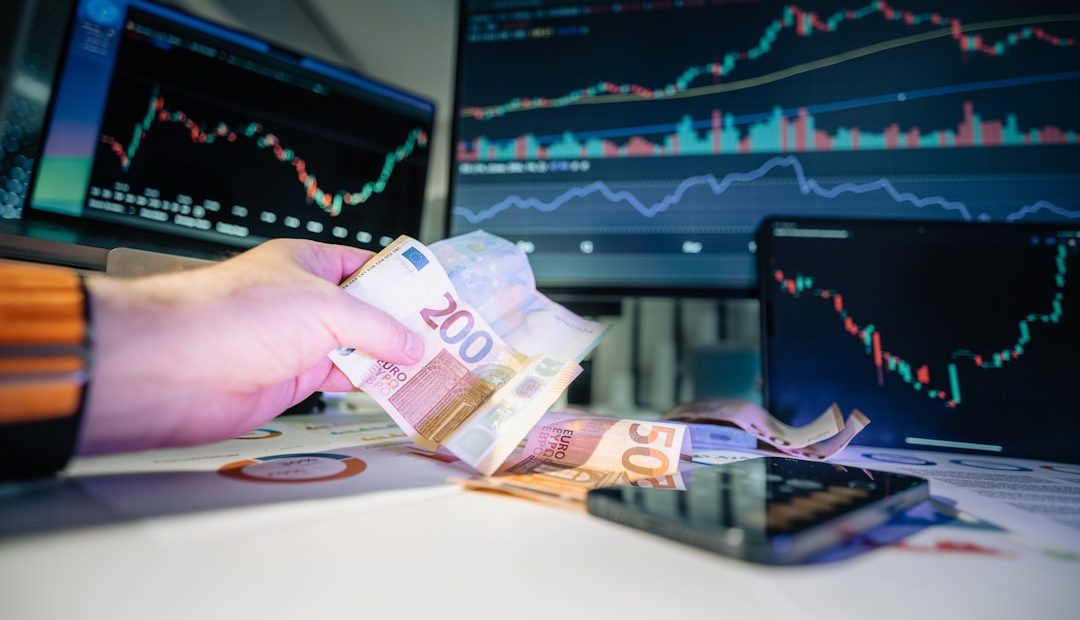
When Silicon Valley Bank collapsed over a single frantic weekend in March 2023, the story broke on social media hours before most traditional outlets had assembled a coherent account. Depositors who acted on early, accurate reporting preserved their capital; those who waited for the morning newspaper did not. That episode crystallised something the financial world had been circling around for years: in markets, the speed and quality of information are no longer merely advantages — they are the playing field itself.
The Convergence of News and Market Intelligence
Financial journalism and market data have always had an uneasy relationship. For most of the twentieth century, they operated in parallel lanes: reporters wrote stories, traders watched tickers, and rarely did the two feel truly integrated. The internet began blurring those boundaries, but it is the proliferation of always-on digital news platforms — combined with algorithmic trading systems that can parse headlines in milliseconds — that has made their convergence irreversible.
Today, a significant share of intraday price volatility in equities, commodities, and currencies can be traced directly to breaking news events rather than underlying changes in corporate fundamentals. Central bank statements, geopolitical developments, regulatory announcements, and even unexpected weather events in agricultural regions all trigger near-instantaneous market reactions. Traders and portfolio managers who rely on morning briefings are, in structural terms, already behind.
This has created genuine demand for platforms that sit at the intersection of journalism and market awareness — not simply financial data terminals, but sources that contextualise events within the broader economic picture. Resources that track financial market trends in real time alongside breaking news give both professional and retail investors a framework for understanding not just what is happening, but why it matters to their positions.
Retail Investors Are No Longer Passive Consumers
One of the more striking structural shifts of the past decade has been the transformation of the retail investor from a largely passive participant — buying index funds and checking quarterly statements — into an active, news-sensitive market actor. The democratisation of commission-free trading, the explosion of financial content on social platforms, and greater access to real-time data have collectively produced a new kind of market participant who monitors news feeds with the same intensity once reserved for institutional trading desks.
This is not without its risks. The same connectivity that allows a small investor to react to a pharmaceutical trial result or a surprise earnings revision also exposes them to misinformation, rumour, and the kind of herd behaviour that amplified the volatility seen during the meme-stock episodes of 2021. The quality of the news source matters enormously — perhaps more so for retail participants than for institutions, which typically have compliance frameworks and research teams to filter signal from noise.
What distinguishes credible financial news coverage from the noise is not simply speed but editorial discipline: the capacity to contextualise a headline within macroeconomic trends, to acknowledge uncertainty, and to avoid the sensationalism that can drive clicks while destroying portfolio value. News outlets that have built trust in this space tend to share a commitment to verification before publication — a standard that matters more in financial coverage than in almost any other beat, given the direct monetary consequences of acting on bad information.
The Macro Picture: Why Context Is the New Competitive Edge
There is a broader argument worth making about the role of quality journalism in the functioning of markets generally. Efficient markets, in the classical sense, depend on the rapid and accurate incorporation of publicly available information into prices. Poor-quality information — incomplete, distorted, or deliberately misleading — introduces friction and misallocation. When reporting on central bank policy trajectories, trade balance shifts, or sectoral regulatory changes is shallow or inconsistent, markets price risk imprecisely, and that imprecision has real economic costs.
The macroeconomic environment of the mid-2020s has made this particularly acute. Interest rate cycles of a complexity not seen since the 1970s and 1980s, ongoing supply chain restructuring, energy transition pressures on industrial sectors, and persistent geopolitical instability across multiple regions have collectively produced a landscape where the interaction between news events and market outcomes is both faster and harder to interpret than at any previous point in most investors’ careers.
What This Means for How People Consume Financial News
Experienced market participants are adapting by becoming more deliberate about their information diet — distinguishing between sources that generate reactive heat and those that produce analytical light. There is growing recognition that the ability to sit with a developing story, to understand its second-order implications, and to resist the impulse to trade on every headline is itself a form of competitive advantage.
Which brings the discussion back to that weekend in March 2023. The investors who navigated it well were not necessarily those with the fastest feed. They were the ones who understood enough context to evaluate what the headlines actually meant — and had built habits of consumption that made that evaluation possible. In a market environment shaped by the speed of information, depth of understanding remains the durable edge.

Leave a Reply